SparkFun Humidity Sensor Breakout - SHTC3
Looking to keep a log of the climate in your greenhouse, create a humidor control system or want to track temperature and humidity data for a weather station project? The SparkFun SHTC3 Humidity Sensor may be the perfect option for you!
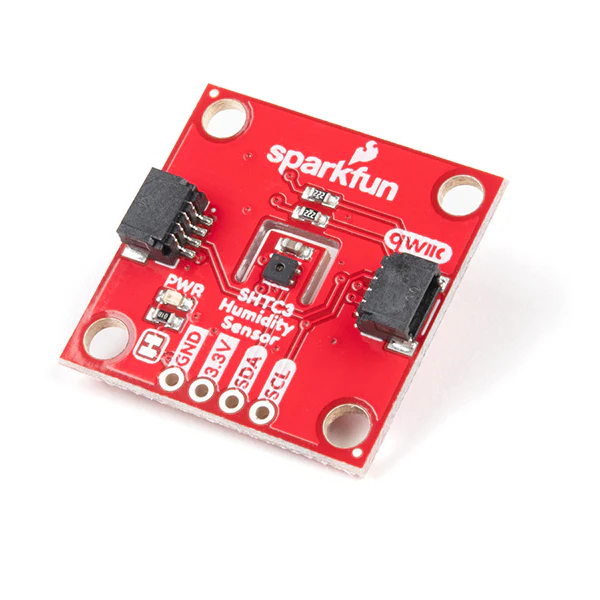
The SHTC3 is a low cost, easy-to-use, highly accurate digital humidity and temperature sensor. The SHTC3 communicates via I2C so, as you can tell by the name, we have broken out the pins on the sensor to Qwiic connectors so you can easily connect it to SparkFun's ever growing Qwiic Ecosystem.
The SHTC3 digital humidity sensor builds on the success of their SHTC1 sensor with a broader supply voltage range (1.62V to 3.6V) and higher accuracy (±2% RH, ±0.2°C) than its predecessor, enabling greater flexibility. All you need are two lines for I2C communication, and you’ll have relative humidity readings and very accurate temperature readings as a bonus!
Hook up is a breeze as the breakout board is using the Qwiic connect system. The breakout board has built-in 2.2kΩ pullup resistors for I2C communications. If you’re hooking up multiple I2C devices on the same bus, you may want to disable these resistors.
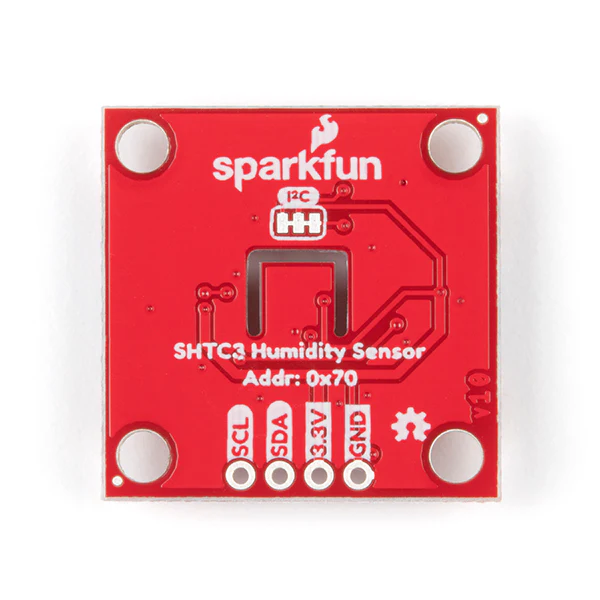
Note: The I2C address of the SHTC3 is 0x70 and is hardware-defined. A multiplexer/Mux is required to communicate to multiple SHTC3 sensors on a single bus. If you need to use more than one SHTC3 sensor consider using the Qwiic Mux Breakout.
The SparkFun Qwiic Connect System is an ecosystem of I2C sensors, actuators, shields and cables that make prototyping faster and less prone to error. All Qwiic-enabled boards use a common 1mm pitch, 4-pin JST connector. This reduces the amount of required PCB space, and polarized connections mean you can’t hook it up wrong.
Get started with the SparkFun SHTC3 Qwiic humidity guide
Features
- Uses I2C interface (Qwiic-enabled)
- I2C Address: 0x70
- 2x Qwiic Connectors
- Operating voltage range
- 1.62V - 3.6 V
- Typically 3.3V if using the Qwiic cable
- Relative Humidity
- Operating range: 0% to 100%
- Typical accuracy: ±2 %RH
- Resolution: 0.01 %RH
- Temperature
- Operating range: -40°C to +125 °C
- Typical accuracy: ±0.2 °C
- Resolution: 0.01 °C
- Typical current consumption (varies based on mode)
- 4.9µA to 430µA (Normal Mode)
- 0.5µA to 270µA (Low Power Mode)
Documents
- Schematic
- Eagle Files
- Hookup Guide
- Board Dimensions
- Datasheet (SHTC3)
- Qwiic Connect System
- Arduino Library
- GitHub Hardware Repo
Product Information
Product Information
Shipping & Returns
Shipping & Returns

SparkFun Humidity Sensor Breakout - SHTC3
SparkFun Humidity Sensor Breakout - SHTC3
Looking to keep a log of the climate in your greenhouse, create a humidor control system or want to track temperature and humidity data for a weather station project? The SparkFun SHTC3 Humidity Sensor may be the perfect option for you!
The SHTC3 is a low cost, easy-to-use, highly accurate digital humidity and temperature sensor. The SHTC3 communicates via I2C so, as you can tell by the name, we have broken out the pins on the sensor to Qwiic connectors so you can easily connect it to SparkFun's ever growing Qwiic Ecosystem.
The SHTC3 digital humidity sensor builds on the success of their SHTC1 sensor with a broader supply voltage range (1.62V to 3.6V) and higher accuracy (±2% RH, ±0.2°C) than its predecessor, enabling greater flexibility. All you need are two lines for I2C communication, and you’ll have relative humidity readings and very accurate temperature readings as a bonus!
Hook up is a breeze as the breakout board is using the Qwiic connect system. The breakout board has built-in 2.2kΩ pullup resistors for I2C communications. If you’re hooking up multiple I2C devices on the same bus, you may want to disable these resistors.
Note: The I2C address of the SHTC3 is 0x70 and is hardware-defined. A multiplexer/Mux is required to communicate to multiple SHTC3 sensors on a single bus. If you need to use more than one SHTC3 sensor consider using the Qwiic Mux Breakout.
The SparkFun Qwiic Connect System is an ecosystem of I2C sensors, actuators, shields and cables that make prototyping faster and less prone to error. All Qwiic-enabled boards use a common 1mm pitch, 4-pin JST connector. This reduces the amount of required PCB space, and polarized connections mean you can’t hook it up wrong.
Get started with the SparkFun SHTC3 Qwiic humidity guide
Features
- Uses I2C interface (Qwiic-enabled)
- I2C Address: 0x70
- 2x Qwiic Connectors
- Operating voltage range
- 1.62V - 3.6 V
- Typically 3.3V if using the Qwiic cable
- Relative Humidity
- Operating range: 0% to 100%
- Typical accuracy: ±2 %RH
- Resolution: 0.01 %RH
- Temperature
- Operating range: -40°C to +125 °C
- Typical accuracy: ±0.2 °C
- Resolution: 0.01 °C
- Typical current consumption (varies based on mode)
- 4.9µA to 430µA (Normal Mode)
- 0.5µA to 270µA (Low Power Mode)
Documents
- Schematic
- Eagle Files
- Hookup Guide
- Board Dimensions
- Datasheet (SHTC3)
- Qwiic Connect System
- Arduino Library
- GitHub Hardware Repo
Original: $11.00
-65%$11.00
$3.85Product Information
Product Information
Shipping & Returns
Shipping & Returns
Description
Looking to keep a log of the climate in your greenhouse, create a humidor control system or want to track temperature and humidity data for a weather station project? The SparkFun SHTC3 Humidity Sensor may be the perfect option for you!
The SHTC3 is a low cost, easy-to-use, highly accurate digital humidity and temperature sensor. The SHTC3 communicates via I2C so, as you can tell by the name, we have broken out the pins on the sensor to Qwiic connectors so you can easily connect it to SparkFun's ever growing Qwiic Ecosystem.
The SHTC3 digital humidity sensor builds on the success of their SHTC1 sensor with a broader supply voltage range (1.62V to 3.6V) and higher accuracy (±2% RH, ±0.2°C) than its predecessor, enabling greater flexibility. All you need are two lines for I2C communication, and you’ll have relative humidity readings and very accurate temperature readings as a bonus!
Hook up is a breeze as the breakout board is using the Qwiic connect system. The breakout board has built-in 2.2kΩ pullup resistors for I2C communications. If you’re hooking up multiple I2C devices on the same bus, you may want to disable these resistors.
Note: The I2C address of the SHTC3 is 0x70 and is hardware-defined. A multiplexer/Mux is required to communicate to multiple SHTC3 sensors on a single bus. If you need to use more than one SHTC3 sensor consider using the Qwiic Mux Breakout.
The SparkFun Qwiic Connect System is an ecosystem of I2C sensors, actuators, shields and cables that make prototyping faster and less prone to error. All Qwiic-enabled boards use a common 1mm pitch, 4-pin JST connector. This reduces the amount of required PCB space, and polarized connections mean you can’t hook it up wrong.
Get started with the SparkFun SHTC3 Qwiic humidity guide
Features
- Uses I2C interface (Qwiic-enabled)
- I2C Address: 0x70
- 2x Qwiic Connectors
- Operating voltage range
- 1.62V - 3.6 V
- Typically 3.3V if using the Qwiic cable
- Relative Humidity
- Operating range: 0% to 100%
- Typical accuracy: ±2 %RH
- Resolution: 0.01 %RH
- Temperature
- Operating range: -40°C to +125 °C
- Typical accuracy: ±0.2 °C
- Resolution: 0.01 °C
- Typical current consumption (varies based on mode)
- 4.9µA to 430µA (Normal Mode)
- 0.5µA to 270µA (Low Power Mode)
Documents
- Schematic
- Eagle Files
- Hookup Guide
- Board Dimensions
- Datasheet (SHTC3)
- Qwiic Connect System
- Arduino Library
- GitHub Hardware Repo